


THE PHAROS PROJECT
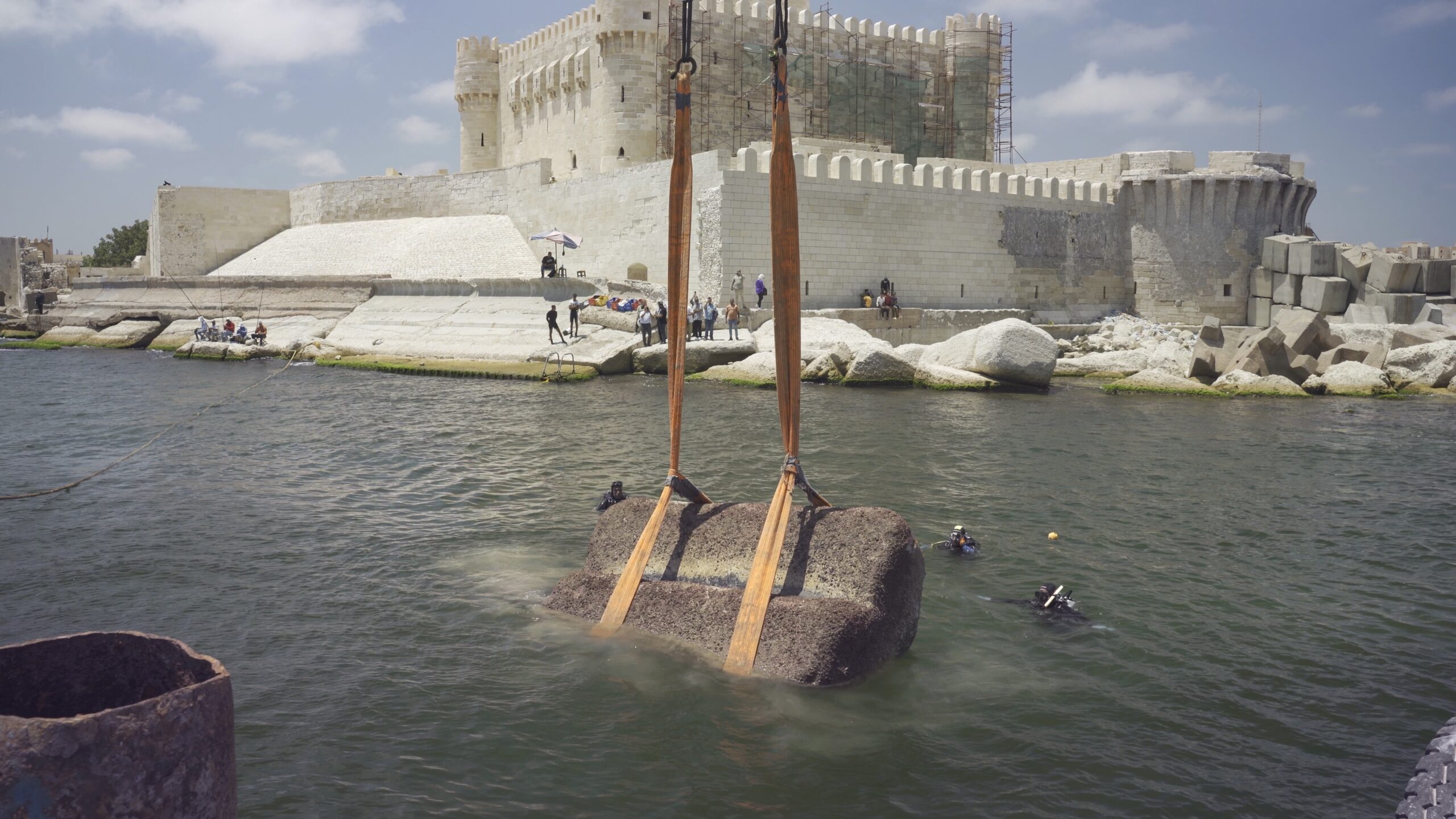
Leading light of Alexandria, the Pharos remained in operation for almost 16 centuries, guiding ships sailing in the eastern Mediterranean towards Alexandria. Its light went out on the morning of 8 August 1303, after significant damage caused by a tsunami that also destroyed about a third of the city. The Lighthouse was not restored after this catastrophe. It later served as a quarry, and its dislodged masonry sank beneath the waters of the Mediterranean.
Since 1994, CEAlex has conducted excavations on the ruins of the Lighthouse, lying at a depth of 5 to 10 metres. In 2009, CEAlex turned to digital technology to document the site and its components, thereby opening a new avenue for its study.
In 2023, the launch of the Pharos project, supported by La Foundation Dassault Systèmes, marks a new milestone. It brings together a multidisciplinary team that undertakes a fresh examination of available ancient sources, – both iconography and texts describing the Lighthouse. This work had not been updated since the series of studies published in 1909 by Hermann Thiersch (Pharos, Antike, Islam und Occident. Ein Beitrag zur Architekturgeschichte, Teubner, Leipzig/Berlin).
In 2025, Gedeon Media Group (https://www.gedeonmediagroup.com/) joins the venture as a sponsor, funding an underwater excavation campaign during which the site’s largest architectural pieces are brought to the surface, documented and analysed.
Over three years, under the leadership of Isabelle Hairy (CNRS, Orient & Méditerranée UMR 8167), the multidisciplinary team has compiled and studied the data. Documentation reveals the Lighthouse’ characteristics: geometry, construction, materials, internal spaces and layouts, as well as form and number of openings. With the backing of three volunteer engineers from La Fondation Dassault Systèmes, the team tests hypotheses, confronts the data, and refines the 3D models. The objective is clear: to achieve an exact scientific model of the Pharos, encompassing both its external architecture and its internal organisation.
Thanks to the power of 3D and virtual worlds, this collaboration brings the legendary monument back to life. For the first time since Ibn Battuta’s visit in 1325, the Pharos of Alexandria can once again be “visited,” offering an immersive dive into the history and architecture of this vanished wonder.
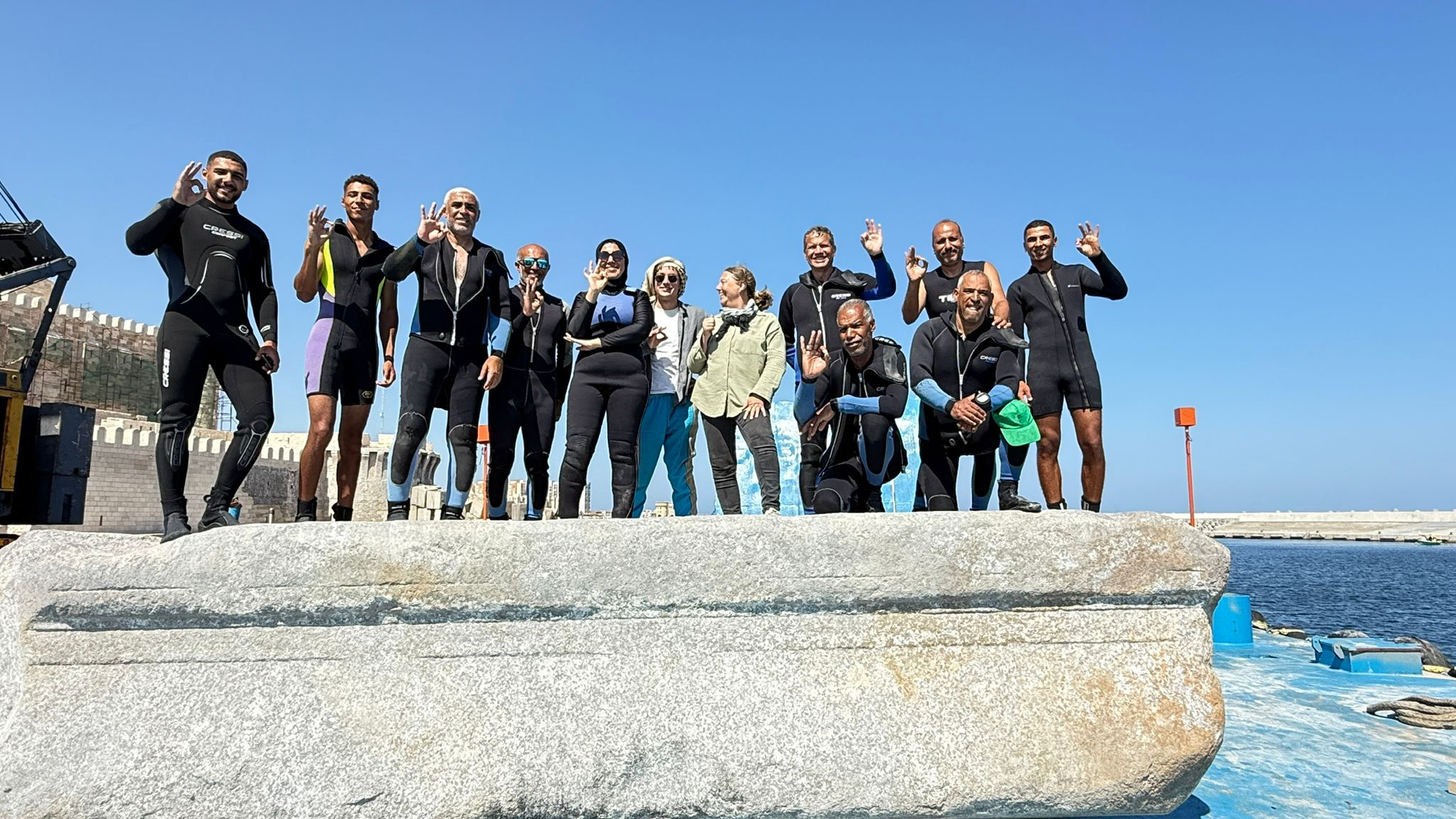
The excavation team during the lifting of the blocks in 2025