
Qaitbay Fort, the pharos’ successor
Kathrin Machinek
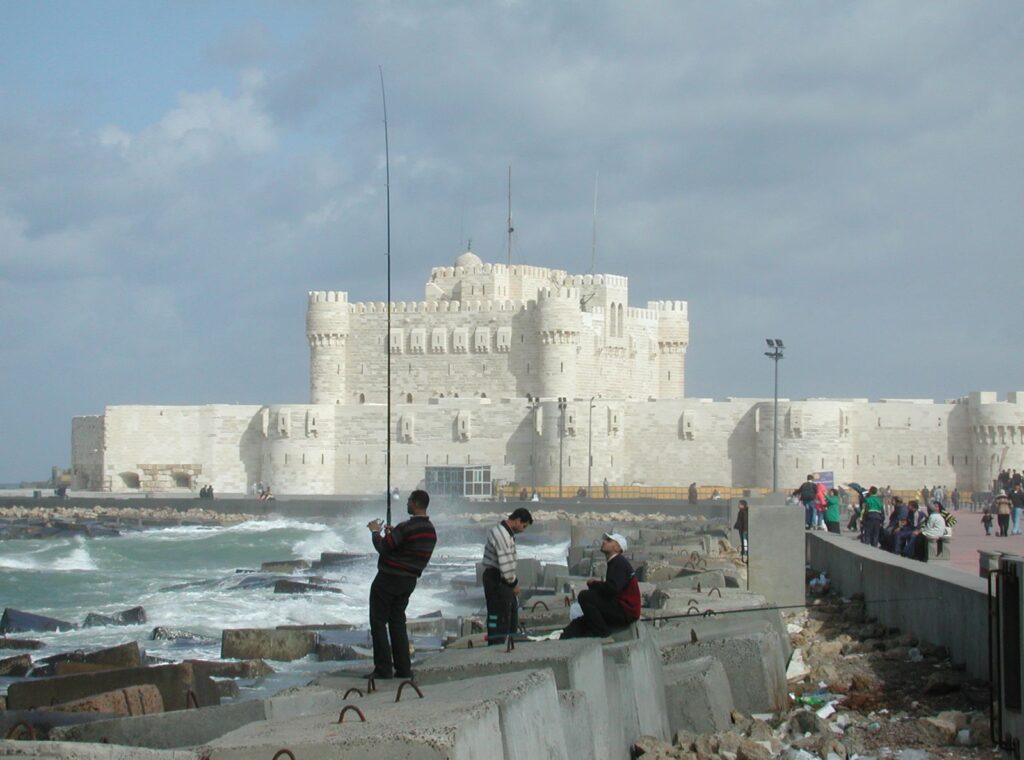
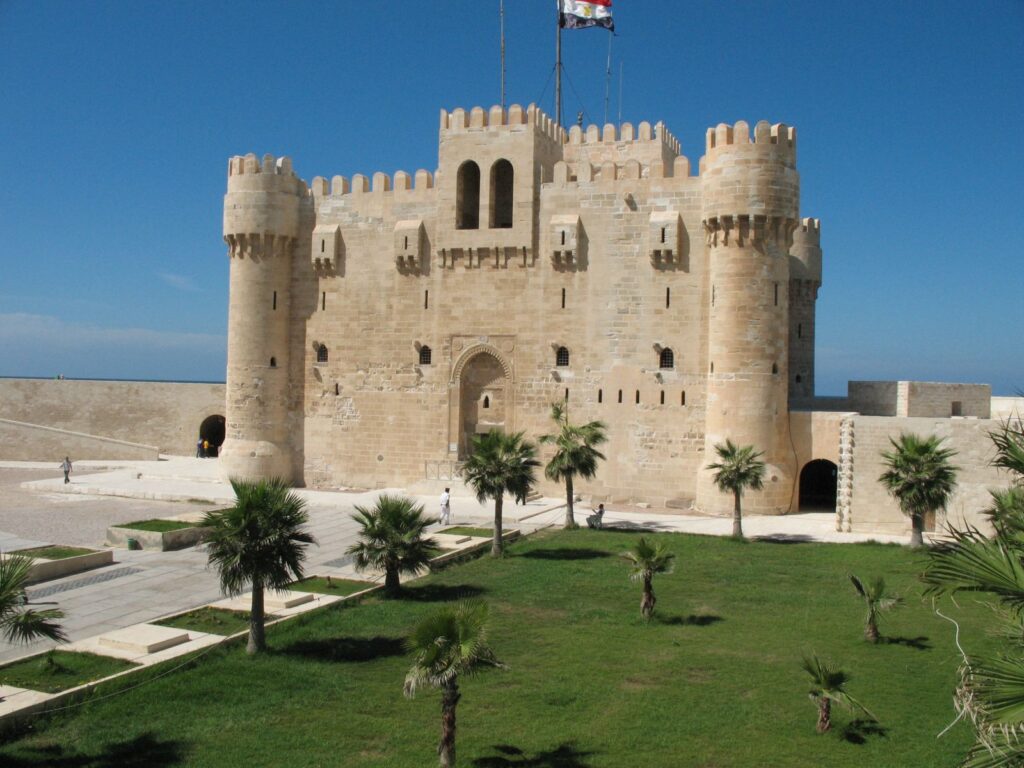
Fig. 1 – Exterior view of Qaitbay Fort, A. Pelle 2002, © CEAlex
The violent earthquake that struck Egypt and Alexandria in 1303 destroyed a third of the city and severely damaged its ramparts. According to Arab chroniclers, 46 buttresses and 27 towers of the medieval city wall collapsed (al-Maqrîzî, al-Sulûk, 943: 12–14). The Pharos also suffered substantial damage. However, attempts to rebuild a new lighthouse on the ruins of the old one failed, and the structure gradually crumbled.
From then on, a simple watchtower, located on Kôm Wa’la hill (now Kôm al-Nadûra), in the heart of the medieval town, was used to keep watch for approaching ships. Pompey’s Pillar, standing on a hill to the south of the fortified town and visible from afar, served as a landmark for sailors. Between 1326 and 1341, a small fort was built on the promontory opposite the ruins of the Lighthouse by the Mamluk sultan al-Nâsir Mohammed. Called “Pharillon” in reference to the ancient Lighthouse, the fort defended the entrance to the eastern harbor.
As a coastal city on the frontier of the Mamluk Empire, Alexandria was frequently subject to naval attacks, and the collapse of the Lighthouse left a critical gap in the city’s defenses. The raid on the city by the troops of Peter I of Lusignan, King of Cyprus, in 1365 revealed the weakness of the coastal fortifications. Worse still, the Ottomans, expanding across the eastern Mediterranean, posed an increasing threat to Egypt throughout the 15th century.
In June 1477, Sultan al-Ashraf Qaitbay (r. 1468–1496), one of the last Mamluk rulers and a lover of architecture, visited the coastal city and the site of the ruined lighthouse. The chronicler Ibn lyâs reported this event: “He wished to see the site of the ancient lighthouse and ordered a tower to be built on the old foundations, and it was there that the mighty keep which still stands today was built” (Badâi’, III, 132: 12–14, 156: 1–13).
The construction of the new harbor fort at Alexandria was part of a wider project to fortify Egypt, during which Qaitbay also had a small fort built at the mouth of the Nile at Rosetta. According to the accounts of several travellers, the master builder of the Alexandria fort was a German renegade, a slave originally from the town of Oppenheim near Mainz. Work on the site was supervised by Emir Qijmâs al-Ishâqî.
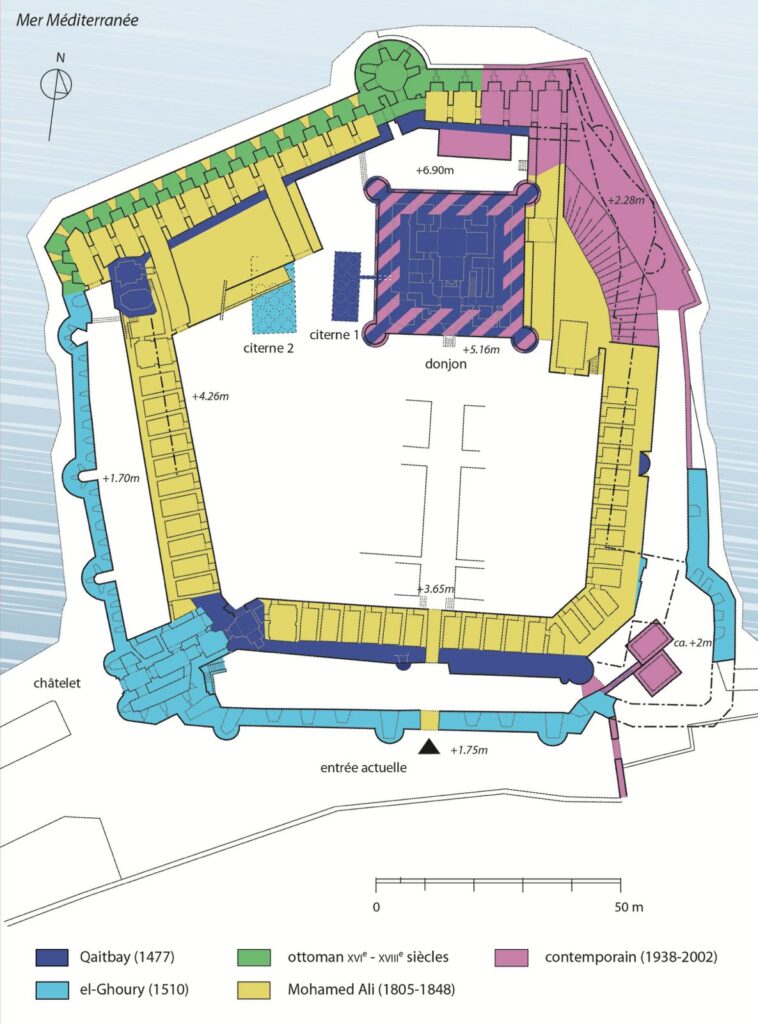
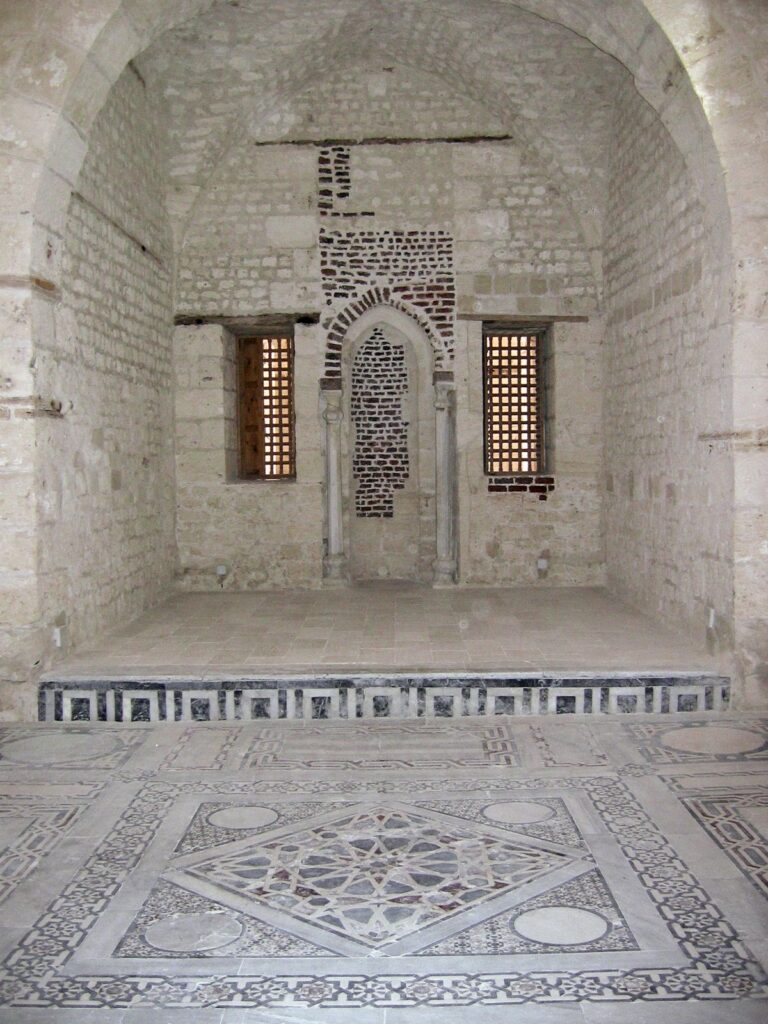
The square keep, reinforced at each of its four corners by a round turret, became the heart of the stronghold. Surrounded by a simple wall, the original fort was equipped with trebuchets and four Venetian guns. Inside the keep, a small prayer room was set up for the Mamluk soldiers. The garrison’s water supply was provided by several underground cisterns, fed by water transported from the city’s large cisterns on the backs of pack animals. Two circular inscriptions praising Qaitbay, the fort’s founder, still adorn the monumental entrance to the keep.
Some fifty years after the fort was founded, fearing an imminent Ottoman attack, the Mamluk sultan Qansuh al-Ghuri (r. 1501–1516) reinforced the original enclosure with an outer wall and fortified the main entrance by constructing a bent corridor through an elongated gatehouse. However, in 1517, Egypt was conquered by the troops of the Ottoman Sultan Selim I, who incorporated it into his empire. The ancient Land of the Pharaohs remained under Ottoman rule for the next three centuries.
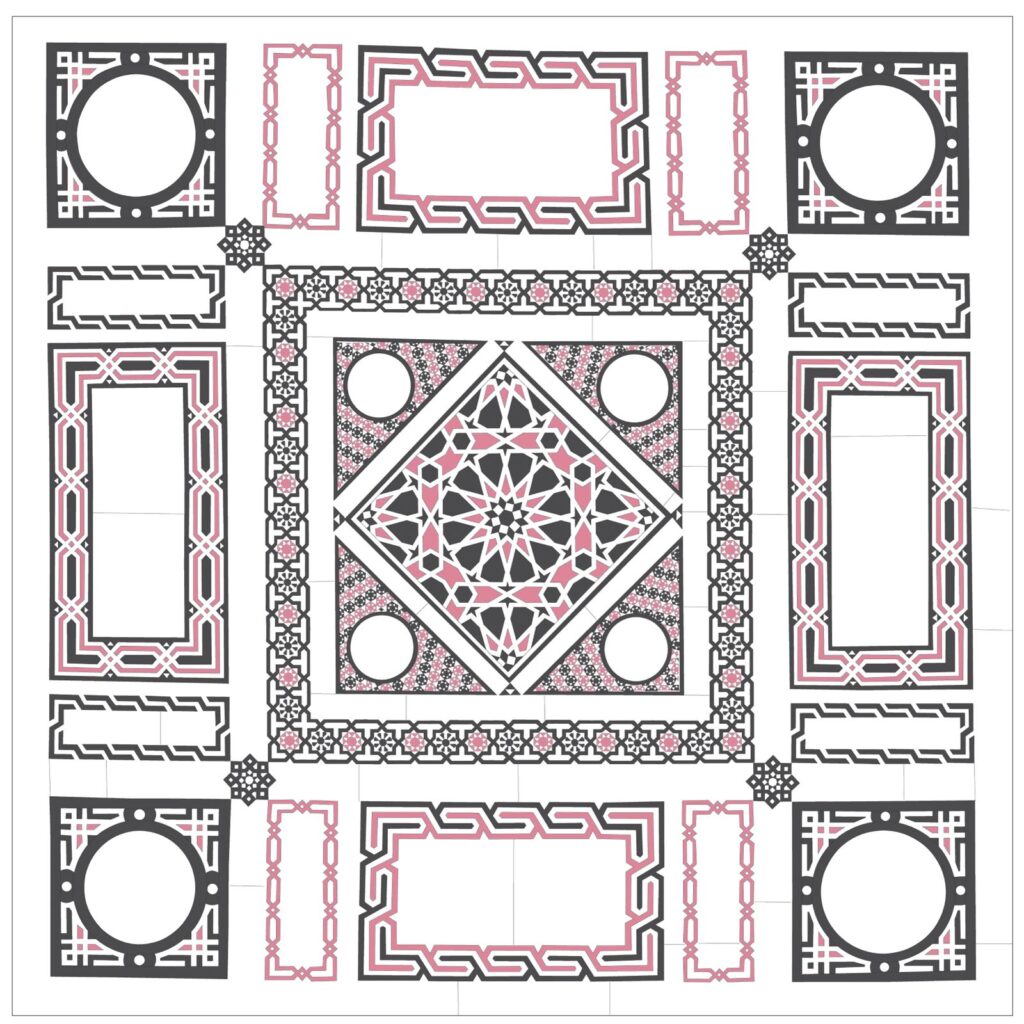
As soon as he came to power, Selim I ordered the restoration of Alexandria’s harbor fort. In particular, he reinforced the northern walls by installing numerous gun ports at water level and adding a raised firing platform. The Ottomans also adorned the keep’s mosque with a floor mosaic featuring intricate geometric patterns, composed of small, carefully cut tesserae. A gradual decline in military discipline during the 17th century caused the fort to be converted into a residential area, with Ottoman soldiers and their families building dwellings in the courtyard.
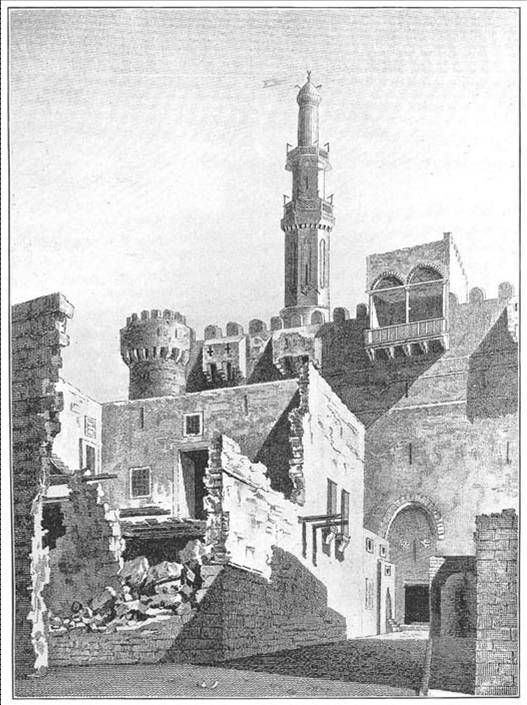
During the Egyptian campaign of 1798–1801, Napoleon Bonaparte landed in Alexandria with his troops, accompanied by 167 scholars. His engineers produced detailed surveys of Qaitbay Fort, some of which were published in the plates of the Description de l’Égypte. In order to restore the fort to full military functionality, the main gate was renovated and the dilapidated Ottoman houses cluttering the courtyard were demolished.
During the reign of Viceroy Mohammed Ali Pasha (r. 1805–1848), the fort was modernized according to the principles of Vauban and transformed into a bastioned stronghold. The seafront was reinforced by a series of underground vaulted firing chambers, topped by a large platform for heavy artillery. Around forty rooms were added around the perimeter of the courtyard to house the soldiers.
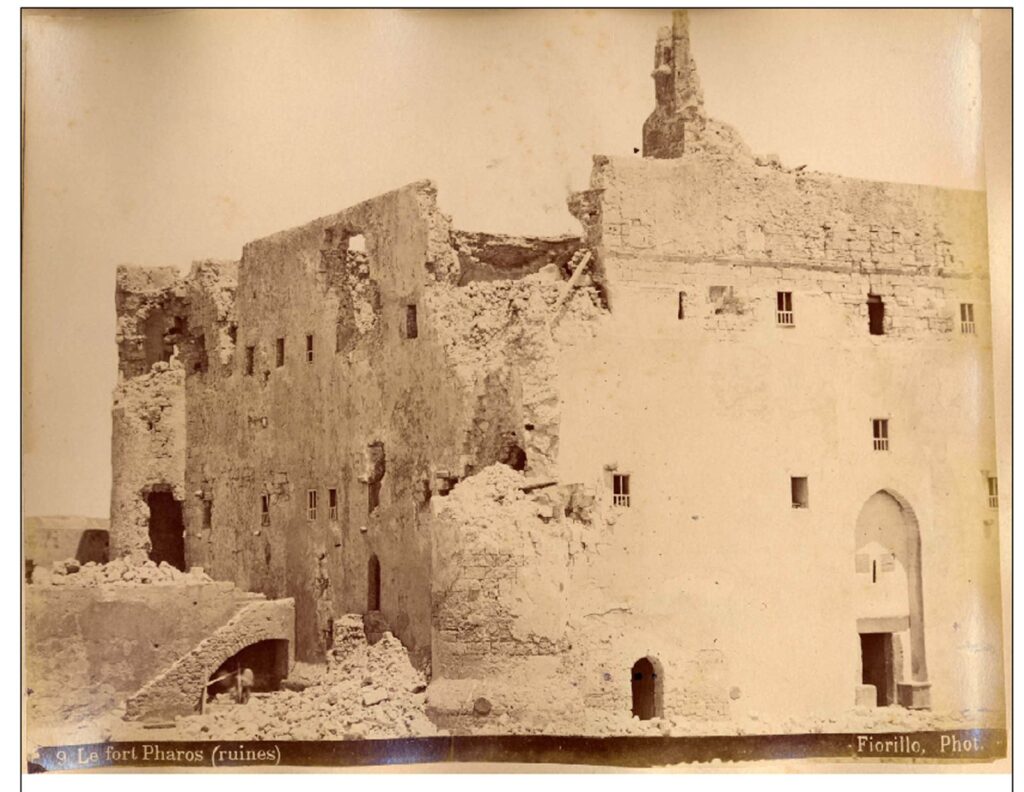
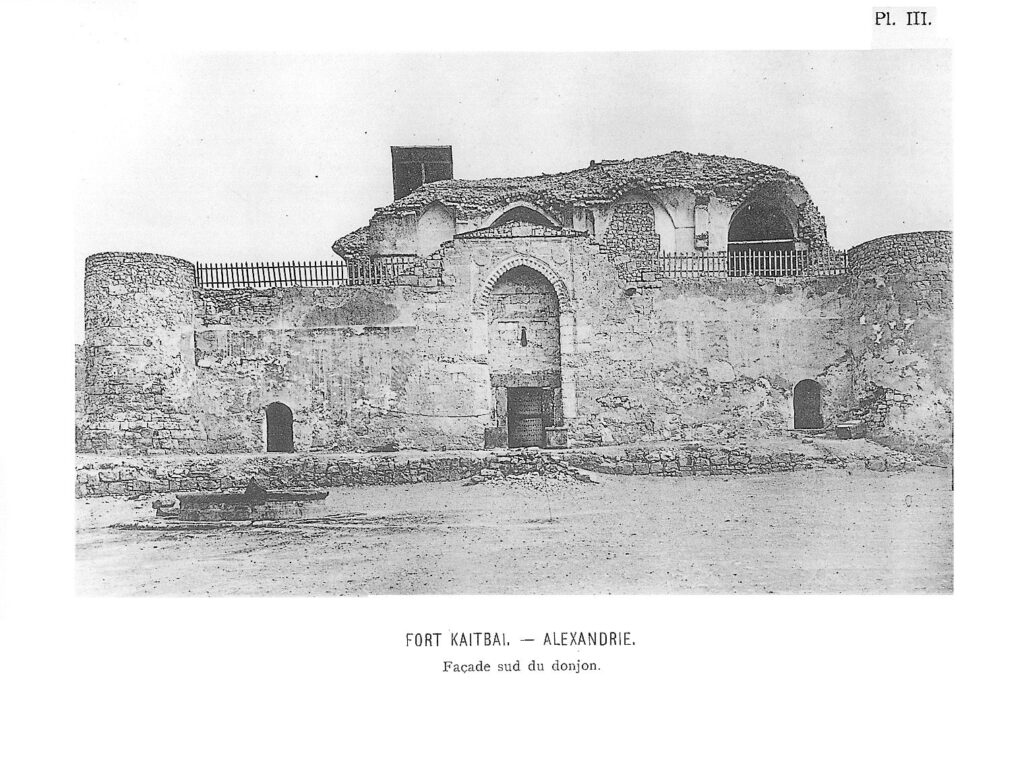
In 1882, during the nationalist uprising led by Ahmed Orabi, the fort was severely damaged by bombardment from the British fleet. The resulting structural instability of the keep forced the Egyptian authorities, in 1904, to demolish the two upper storeys. Only the ground floor, with its thick load-bearing walls, was spared, thus preserving the Mamluk mosque and its splendid mosaic, which had been listed as a historic monument in 1888.
Thanks to the initiative of the Committee for the Preservation of Arab Monuments, founded in 1881 by Khedive Tawfiq, the reconstruction of the keep began in 1939. Today, Qaitbay Fort is the only monument from the Mamluk period open to visitors in Alexandria. This iconic site, steeped in history, attracts many tourists every year.
Further reading
K. Machinek
« Deux citernes hypostyles dans le fort Qaitbay (Alexandrie) », in M.-D. Nenna (éd.), Alexandrina 5, ÉtAlex 50, Alexandrie, 2020, p. 439-464.
Le fort Qaitbay, Les petits guides d’Alexandrie, Alexandrie, 2009, édition en anglais, arabe et français.
Das Fort Qaitbay in Alexandria – Baugeschichte und Architektur einer mamlukischen Hafenfestung im mittelalterlichen Stadtbefestigungssystem von Alexandria ; thèse de doctorat, soutenue à la Faculté d’Architecture de l’Université de Karlsruhe (KIT) en 2014.
« Aperçu sur les fortifications médiévales d’Alexandrie. Histoire, architecture et archéologie », in M. Eychenne, A. Zouache (éd.), La guerre dans le Proche-Orient : État de la question, lieux communs, nouvelles approches, RAPH 37, Le Caire, Damas, 2015, p. 363-394.
« Sondages archéologiques au fort Qaitbay à Alexandrie », in Chr. Décobert, J.-Y. Empereur (éd.), Alexandrie médiévale 3, ÉtAlex 16, Le Caire, 2008, p. 347-367.
H. Thiersch, Pharos – Antike, Islam und Occident: Ein Beitrag zur Architekturgeschichte, Berlin, Leipzig, 1909.